RYUTRAINING

Free program · 5 days a week

5 Day Split Workout Plan

A 5 day split (often called a bro split) trains one body part a day: chest on Monday, back on Tuesday, shoulders on Wednesday, arms on Thursday, legs on Friday, weekends off. Each muscle gets one long, focused session a week. It works when you never skip a day; this page shows the full program and the honest trade-off.

Who
You've trained for at least a few months and know the main lifts.
Days
5 days a week
Structure
Chest (Chest, Front delts, Triceps) · Back (Lats, Mid back, Biceps) · Shoulders (Front, side & rear delts) · Arms (Triceps, Biceps, Forearms) · Legs (Quads, Hamstrings, Glutes, Calves)
Sessions
45–55 min / 55–65 min / 65–75 min each
Where
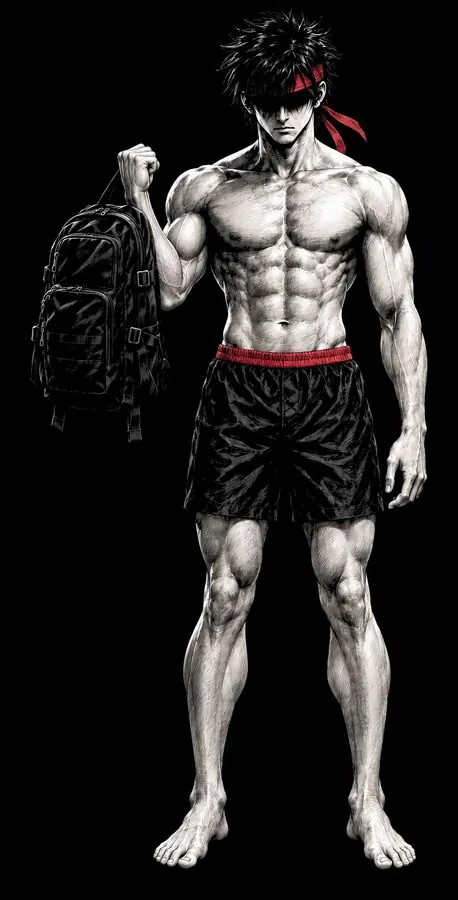
Gym, or home with a backpack, bands, a pull-up bar, a chair and a step

Updated 2026-10-24 · by Ryu Training

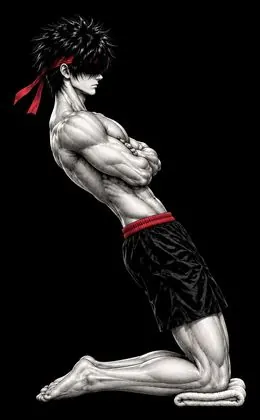
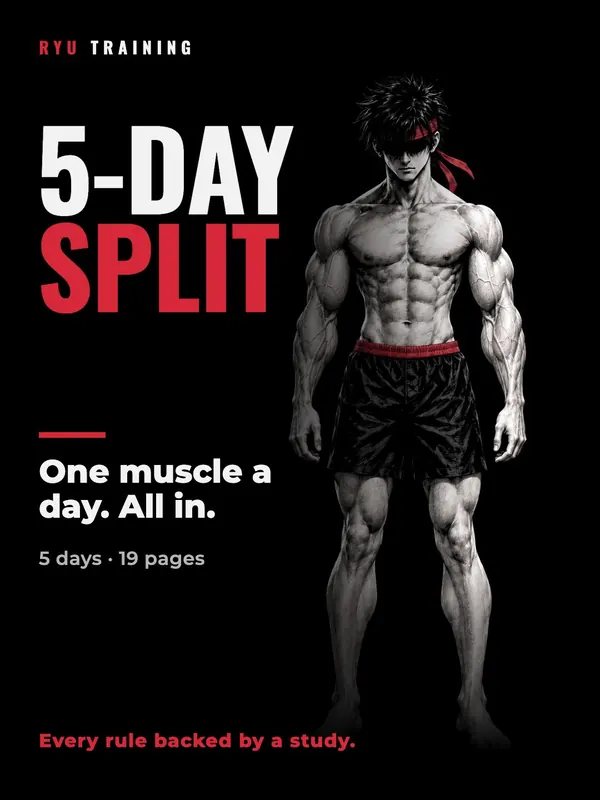
Cover of the free 5-Day Split program PDF by Ryu Training

Who this program is for

Each day hits one body part with several exercises and enough sets to train it for the whole week. Chest day also works your triceps, back day your biceps, so arms get extra work.

This is for you if

  • You've trained for at least a few months and know the main lifts.
  • You can train 5 days a week, every week, without skipping.
  • You like to focus on one body part and feel it work.
  • You train at a gym, or at home with a backpack, bands and a pull-up bar.

Not for you if

  • You have pain or an injury: see a doctor or physical therapist first.
  • Your schedule changes a lot: a missed day here means that muscle waits two weeks. Take Upper / Lower instead.

Your week

Keep the order. Weekends off. If you miss a day, do it on Saturday rather than skipping it.

5 days

Each muscle once a week, directly.

  1. MonChest
  2. TueBack
  3. WedShoulders
  4. ThuArms
  5. FriLegs
  6. SatRest
  7. SunRest

Hard sets per muscle, per week

  • Chest10
  • Back12
  • Shoulders8
  • Rear delts3
  • Triceps6
  • Biceps6
  • Quads8
  • Hamstrings6
  • Calves3

Direct hard sets per week. Chest and shoulder presses add triceps work, back day adds biceps work.

The honest trade-off

A split trains each muscle hard once a week. When studies matched the weekly sets, split and full-body routines built the same muscle and strength. But one study in trained men found that training each muscle 3 times a week grew the arms more than a split, and an earlier meta-analysis favoured twice a week over once. So the split works, as long as you do all the sets and never skip a day. If you can't promise that, Upper / Lower is the safer choice.

Study: Efficacy of Split Versus Full-Body Resistance Training on Strength and Muscle Growth (2024). Ramos-Campo DJ et al., J Strength Cond Res, PMID 38595233. 14 studies, 392 people: split and full-body routines gave the same strength and muscle gains when weekly volume was equal.

Study: How many times per week should a muscle be trained to maximize muscle hypertrophy? (2019). Schoenfeld BJ et al., J Sports Sci, PMID 30558493. 25 studies: with the same weekly sets, training a muscle 1, 2 or 3+ times a week gave similar growth.

Study: Influence of Resistance Training Frequency on Muscular Adaptations in Well-Trained Men (2015). Schoenfeld BJ et al., J Strength Cond Res, PMID 25932981. 20 trained men, 8 weeks: a 3-day total-body routine grew the elbow flexors more than a 1-day-per-muscle split; strength gains were similar.

Study: Effects of Resistance Training Frequency on Measures of Muscle Hypertrophy (2016). Schoenfeld BJ et al., Sports Med, PMID 27102172. Earlier meta-analysis: training a muscle twice a week beat once a week (effect size 0.49 vs 0.30).

The full program

Every session, every exercise, with sets × reps, rest and RIR (reps in reserve: how many more clean reps you could still do when you stop the set). Each card shows a home version.

Day 1 · Chest

Chest · Front delts · Triceps · 10 hard sets · 45–55 min

Day 1 · Chest: Chest · Front delts · Triceps, 10 hard sets, 45–55 min
ExerciseSets × repsRestRIR
Bench Press
Home: Push-up
4 × 6–102–3 min1–2
Incline Dumbbell Press
Home: Feet-elevated push-up
3 × 8–122 min1–2
Push-Up
Home: Easier: incline push-up
3 × 10–201–2 min1–2
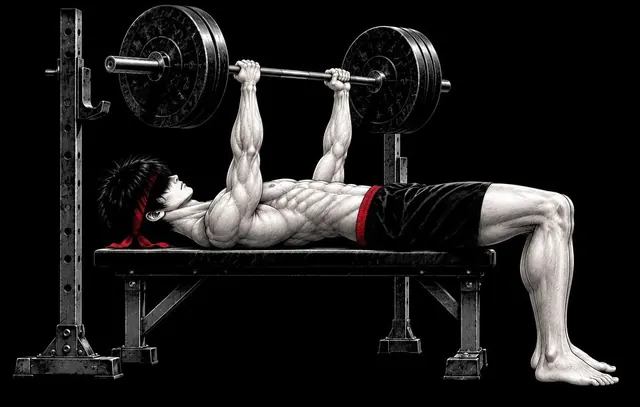
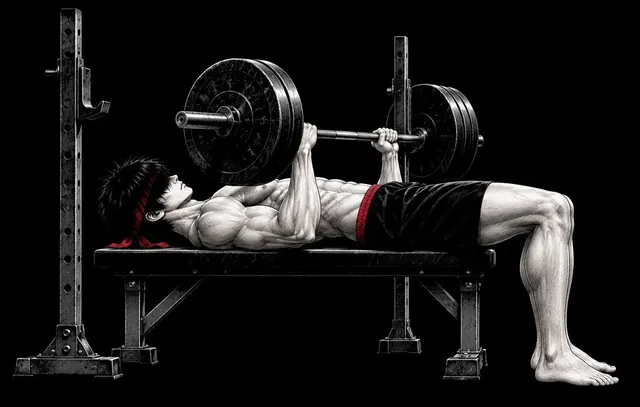
  1. Ryu, the channel's manga character, lying on a flat bench between rack posts with the barbell lowered to his mid-chest
    Start
    Ryu on a flat bench pressing the barbell up, arms straight above his shoulders
    Finish

    01 · Chest · Front delts · Triceps

    Bench Press

    barbell, with safety pins or a spotter

    • 4 × 6–10sets × reps
    • 2–3 minrest
    • RIR 1–2reps in reserve
    • Shoulder blades squeezed, feet flat. Lower the bar to your lower chest, forearms vertical.
    • Press back up over your shoulders. Always use safety pins or a spotter.
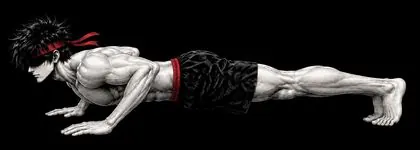
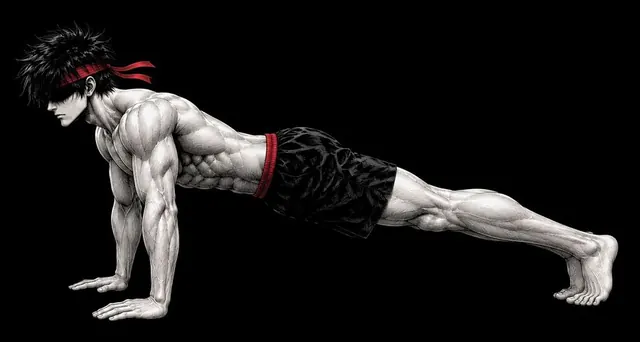
    Ryu in a push-up, body straight from head to heels

    HomePush-up. Too hard: hands on a table. Too easy: feet on a chair.

    Study: Push-ups to near failure grew the chest almost like a light bench press (+22% vs +26%). [Kikuchi & Nakazato 2017]

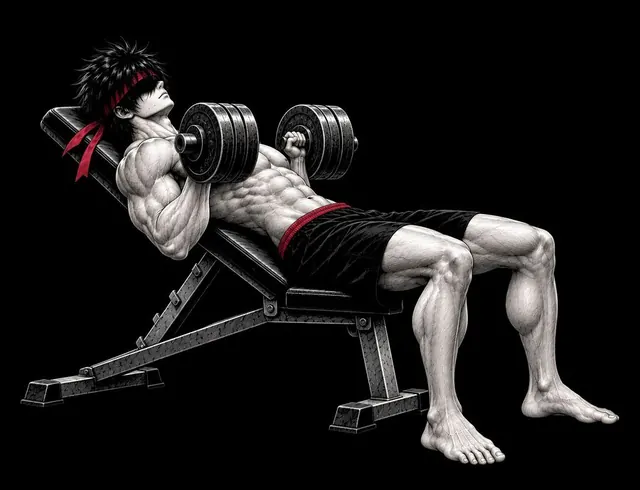
  2. Ryu on a bench inclined about 30 degrees, dumbbells lowered beside his upper chest
    Start
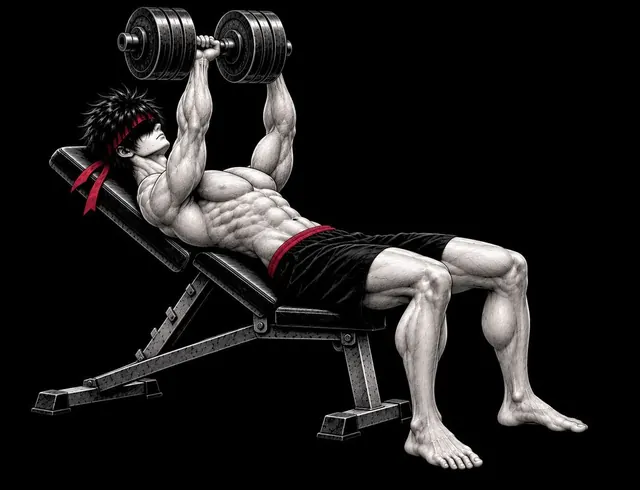
    Ryu on an incline bench with both dumbbells pressed above his upper chest
    Finish

    02 · Upper chest · Front delts

    Incline Dumbbell Press

    bench at about 30°

    • 3 × 8–12sets × reps
    • 2 minrest
    • RIR 1–2reps in reserve
    • Lower the dumbbells to the sides of your upper chest, elbows about 45° from your body.
    • Press up and slightly in. Control the way down.
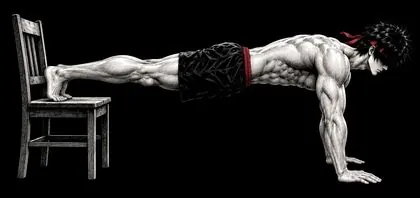
    Ryu doing a push-up with his feet raised on a chair

    HomeFeet-elevated push-up. Feet on a chair: harder than a push-up, with more of the load on the upper chest and shoulders.

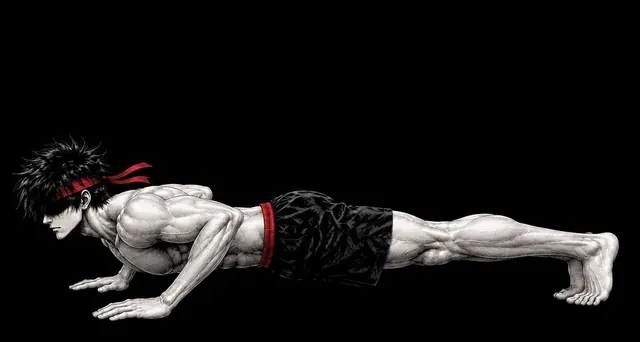
  3. Ryu at the top of a push-up, arms straight and body in one line
    Start
    Ryu at the bottom of a push-up, chest close to the floor
    Finish

    03 · Chest · Triceps · Front delts

    Push-Up

    floor, table or chair version

    • 3 × 10–20sets × reps
    • 1–2 minrest
    • RIR 1–2reps in reserve
    • Hands a bit wider than your shoulders, body straight from head to heels.
    • Chest to a fist from the floor, elbows about 45° from your body.
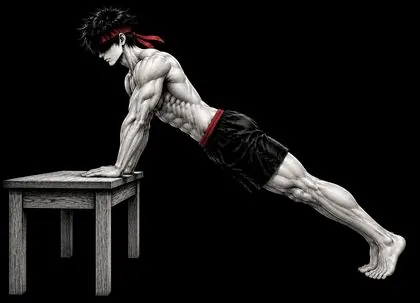
    Ryu doing an incline push-up with his hands on a table

    HomeEasier: incline push-up. Hands on a table. Harder: feet on a chair.

    Study: In 8 weeks, push-ups grew the chest +22% and the triceps +10.5%. [Kikuchi & Nakazato 2017]

Day 2 · Back

Lats · Mid back · Biceps · 12 hard sets · 55–65 min

Day 2 · Back: Lats · Mid back · Biceps, 12 hard sets, 55–65 min
ExerciseSets × repsRestRIR
Pull-Up
Home: Doorway bar, or inverted row
4 × 5–102–3 min1–2
One-Arm Dumbbell Row
Home: Backpack row
3 × 8–12 per arm2 min1–2
Lat Pulldown
Home: Inverted row
3 × 10–122 min1–2
Inverted Row
Home: Table row
2 × 10–151–2 min1
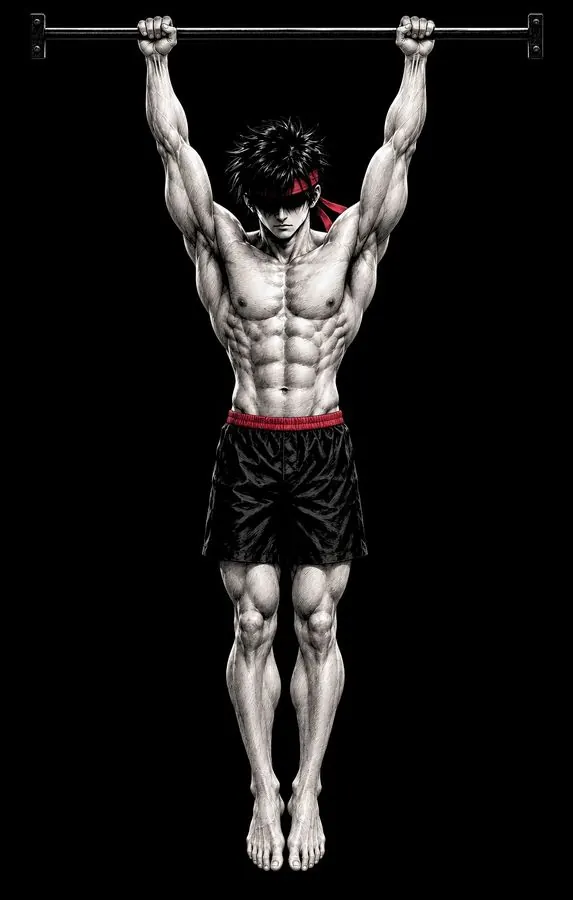
  1. Ryu hanging from a pull-up bar with straight arms
    Start
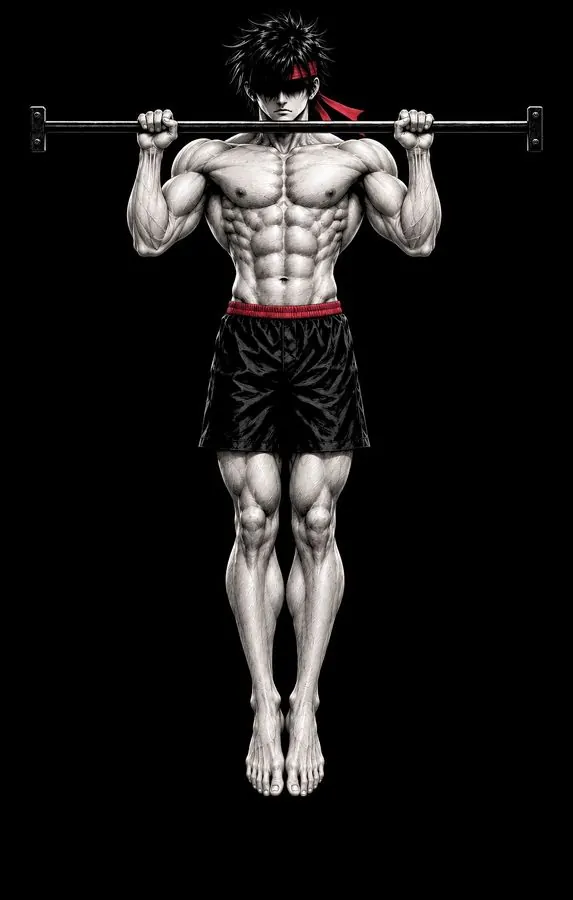
    Ryu at the top of a pull-up, chin above the bar
    Finish

    01 · Lats · Upper back · Biceps

    Pull-Up

    band-assisted if you can't do 5 yet

    • 4 × 5–10sets × reps
    • 2–3 minrest
    • RIR 1–2reps in reserve
    • Hands a bit wider than your shoulders. Start each rep from straight arms.
    • Pull your chest toward the bar until your chin clears it, then lower all the way, slowly.
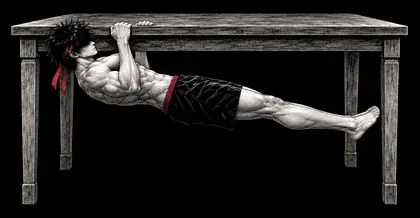
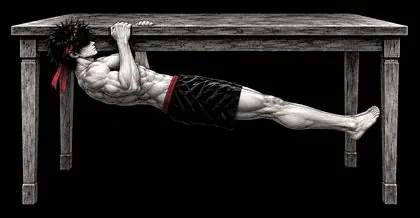
    Ryu under a sturdy table, pulling his chest up to its edge

    HomeDoorway bar, or inverted row. No pull-up yet? Jump up and lower yourself in 3–5 seconds (2–4 reps), then do inverted rows.

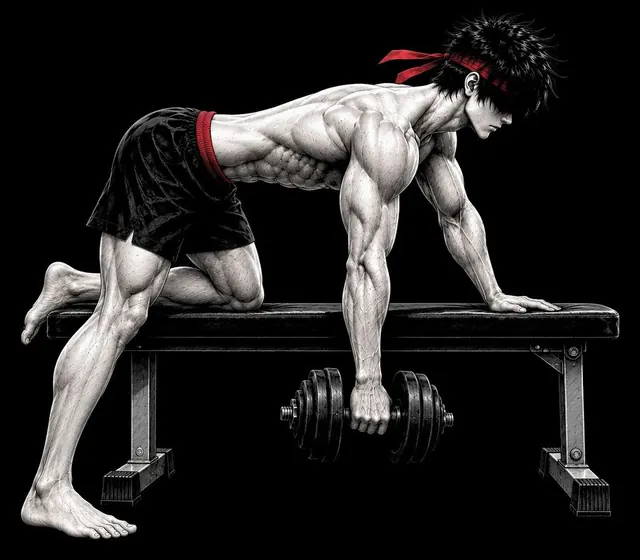
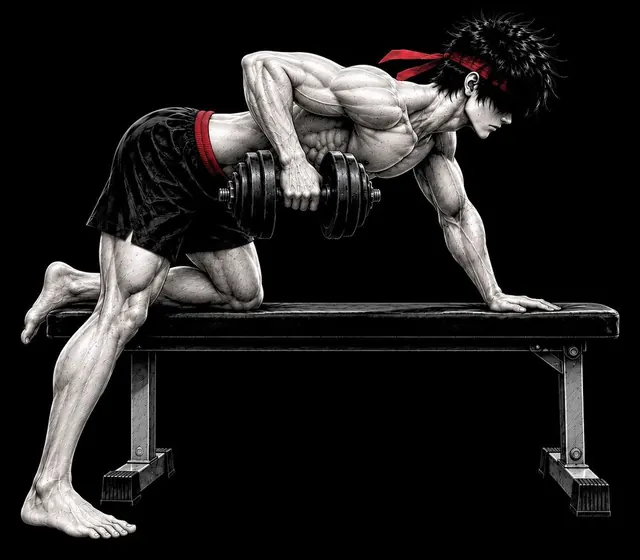
  2. Ryu with one knee and one hand on a bench, the dumbbell hanging under his shoulder
    Start
    Ryu rowing the dumbbell up to his lower ribs, back flat
    Finish

    02 · Lats · Mid back · Rear delts

    One-Arm Dumbbell Row

    bench for support

    • 3 × 8–12sets × reps per arm
    • 2 minrest
    • RIR 1–2reps in reserve
    • Hand and knee on the bench, back flat. Let the dumbbell hang so your back stretches.
    • Pull your elbow back toward your hip, pause, lower slowly. Sets are per arm.

    HomeBackpack row. Same position with one hand on a chair, rowing a loaded backpack.

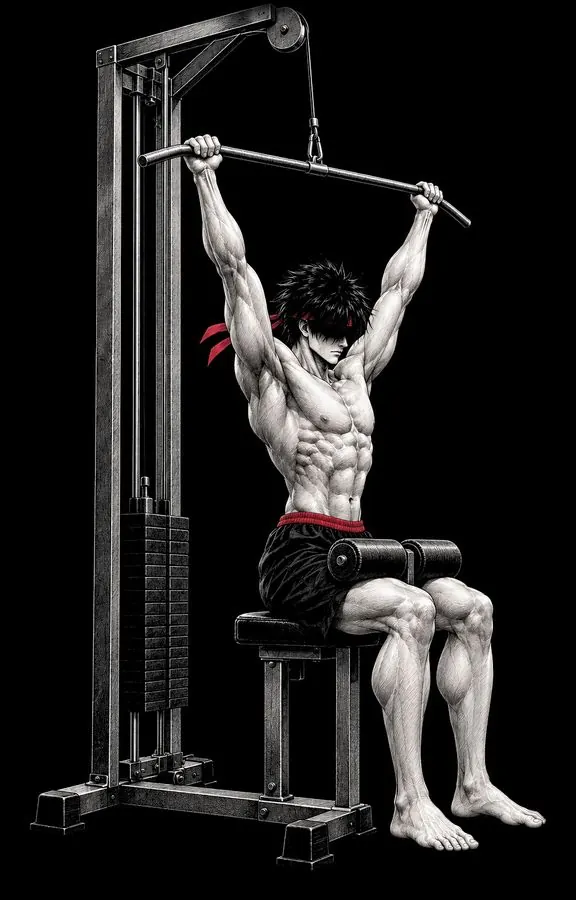
  3. Ryu seated at a lat pulldown machine, arms stretched overhead on the bar
    Start
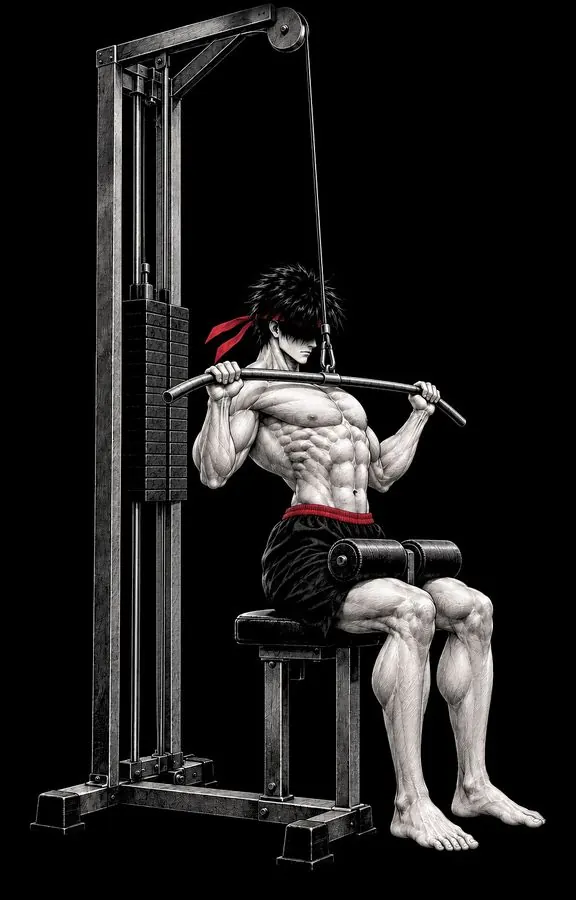
    Ryu pulling the lat pulldown bar to his upper chest
    Finish

    03 · Lats · Biceps

    Lat Pulldown

    cable machine

    • 3 × 10–12sets × reps
    • 2 minrest
    • RIR 1–2reps in reserve
    • Thighs locked under the pads. Let the bar pull your arms all the way up at the top.
    • Pull the bar to your upper chest, elbows down toward your ribs. No swinging back.
    Ryu under a sturdy table, pulling his chest up to its edge

    HomeInverted row. Under a heavy, sturdy table: test it first. Or a band anchored high in a door.

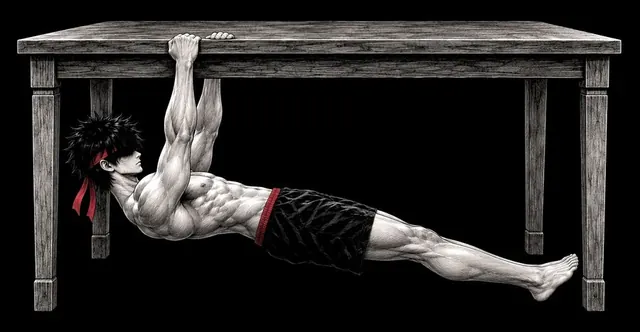
  4. Ryu lying under a table, arms straight, body straight from heels to shoulders
    Start
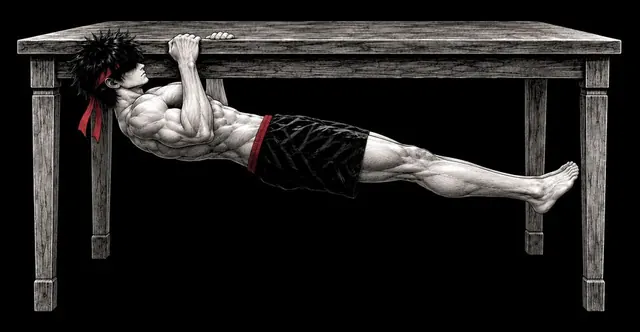
    Ryu pulling his chest up to the edge of the table
    Finish

    04 · Upper back · Lats · Biceps

    Inverted Row

    bar in a rack, or a sturdy table at home

    • 2 × 10–15sets × reps
    • 1–2 minrest
    • RIR 1reps in reserve
    • Body straight as a plank, heels on the floor, arms straight at the bottom.
    • Pull your chest to the bar or table edge, elbows back. Bend your knees to make it easier.

    HomeTable row. Only under a heavy table that can't tip: test it with your full weight first.

Day 3 · Shoulders

Front, side & rear delts · 11 hard sets · 45–55 min

Day 3 · Shoulders: Front, side & rear delts, 11 hard sets, 45–55 min
ExerciseSets × repsRestRIR
Seated Dumbbell Shoulder Press
Home: Pike push-up
4 × 8–122 min1–2
Lateral Raise
Home: Band or water-bottle raise
4 × 12–201 min0–1
Band Pull-Apart
Home: Same move
3 × 15–201 min1
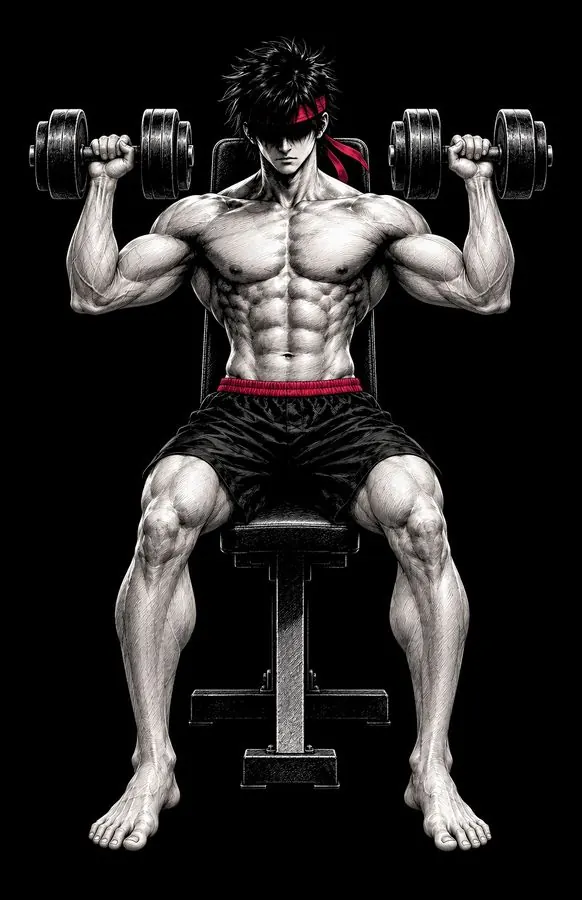
  1. Ryu seated on a bench with a back pad, dumbbells at shoulder height
    Start
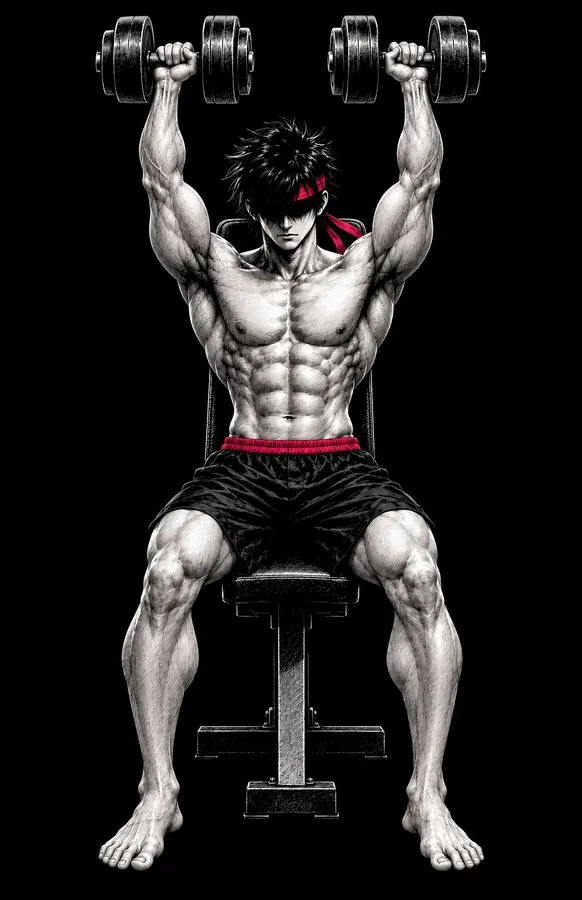
    Ryu seated, pressing both dumbbells overhead
    Finish

    01 · Front & side delts · Triceps

    Seated Dumbbell Shoulder Press

    bench with a back pad

    • 4 × 8–12sets × reps
    • 2 minrest
    • RIR 1–2reps in reserve
    • Back against the pad, dumbbells at shoulder height, forearms vertical.
    • Press until your arms are almost straight, lower to ear level under control.
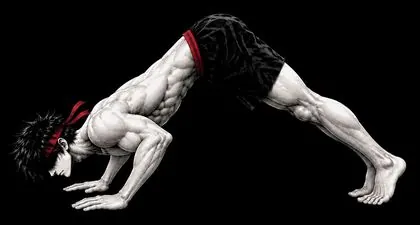
    Ryu in a pike push-up, hips high, lowering his head toward the floor

    HomePike push-up. Hips high, lower the top of your head toward the floor in front of your hands. Feet on a chair to make it harder.

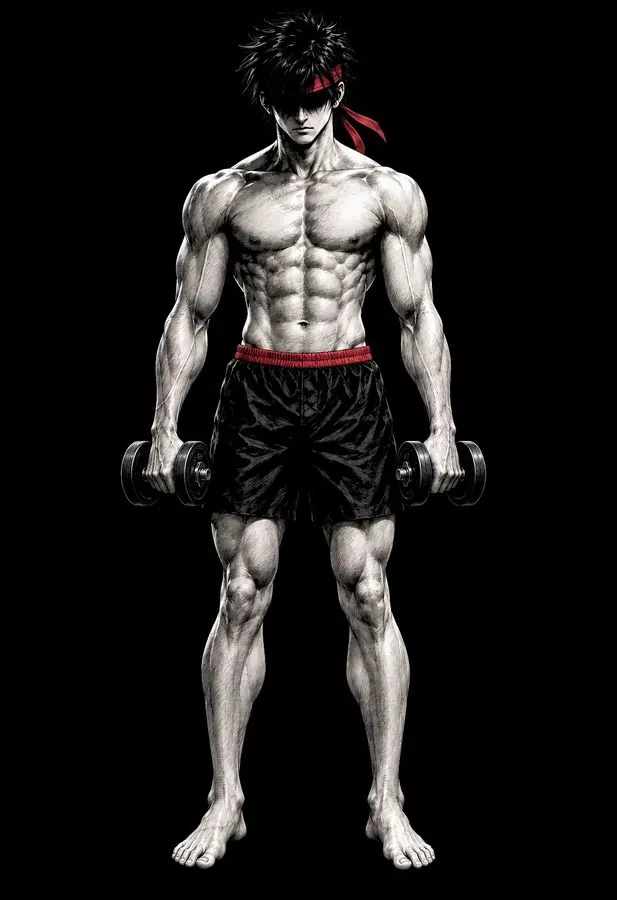
  2. Ryu standing with a light dumbbell in each hand at his sides
    Start
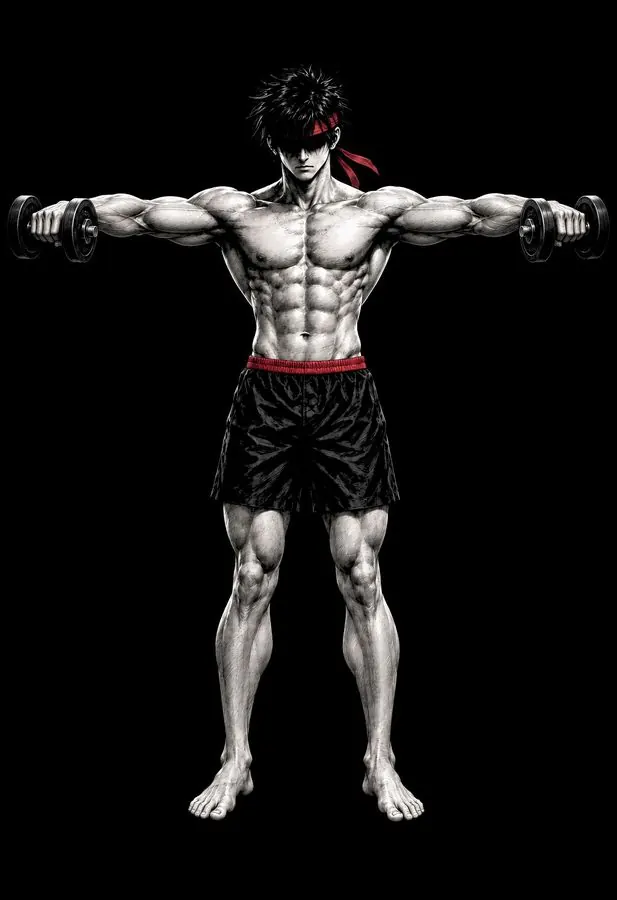
    Ryu with both arms raised out to the sides at shoulder height, holding dumbbells
    Finish

    02 · Side delts

    Lateral Raise

    dumbbells or cable

    • 4 × 12–20sets × reps
    • 1 minrest
    • RIR 0–1reps in reserve
    • Slight bend in the elbows. Lift out to the sides, up to shoulder height.
    • Light weight, no swinging. Lower in 2–3 seconds.

    HomeBand or water-bottle raise. Stand on the middle of a band, or hold two full water bottles.

    Study: Dumbbell and cable raises grew the side delts the same. [Larsen et al. 2025]

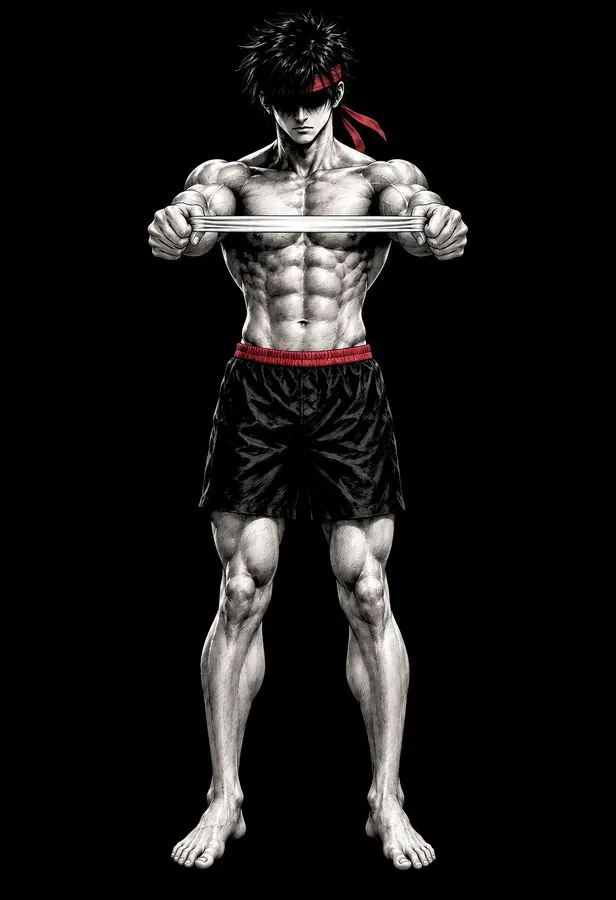
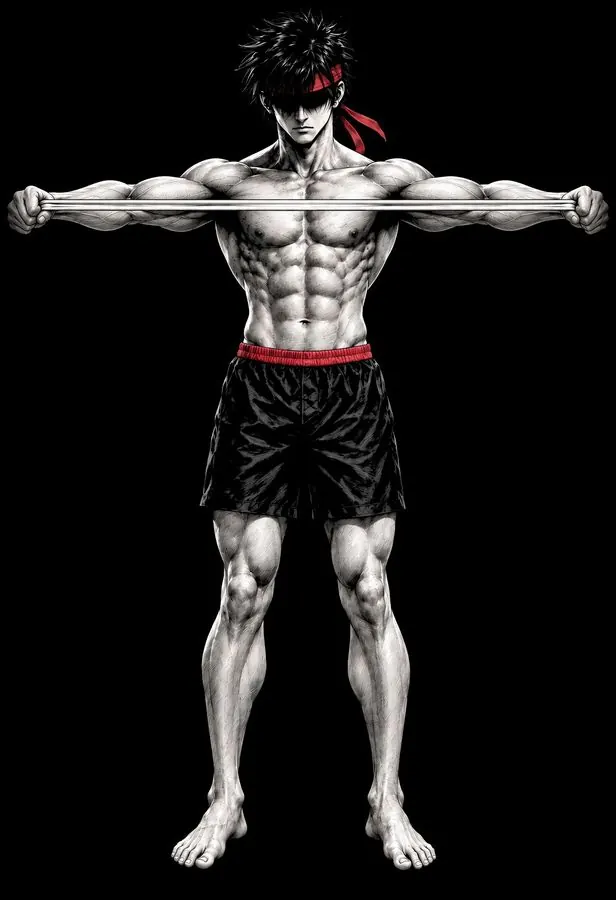
  3. Ryu holding a resistance band in front of his chest with straight arms
    Start
    Ryu pulling the band apart to his chest, arms spread wide
    Finish

    03 · Rear delts · Upper back

    Band Pull-Apart

    light to medium band

    • 3 × 15–20sets × reps
    • 1 minrest
    • RIR 1reps in reserve
    • Arms straight in front at shoulder height, hands shoulder-width on the band.
    • Pull the band to your chest by squeezing your shoulder blades. Return slowly.

    HomeSame move. A band is the cheapest piece of home equipment you can buy.

    Study: Bands built as much strength as dumbbells and machines (8 studies). [Lopes et al. 2019]

Day 4 · Arms

Triceps · Biceps · Forearms · 12 hard sets · 45–55 min

Day 4 · Arms: Triceps · Biceps · Forearms, 12 hard sets, 45–55 min
ExerciseSets × repsRestRIR
Overhead Triceps Extension
Home: Backpack overhead extension
3 × 10–151–2 min1
Dumbbell Curl
Home: Backpack or band curl
3 × 8–121–2 min1
Triceps Pushdown
Home: Close-grip push-up
3 × 10–151 min0–1
Hammer Curl
Home: Water-bottle hammer curl
3 × 10–151 min0–1
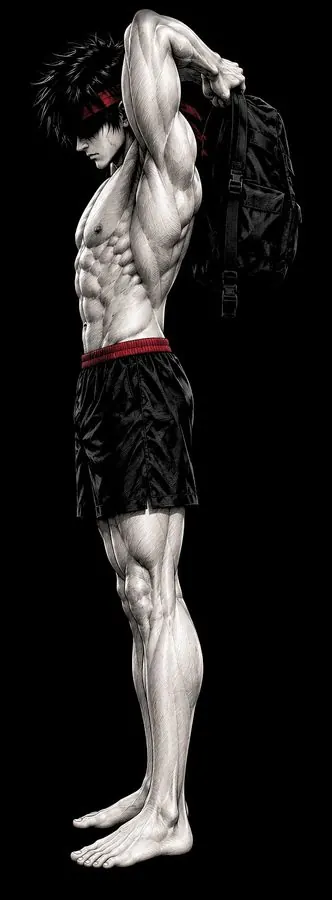
  1. Ryu seen from the side with his elbows up, the weight lowered behind his head
    Start
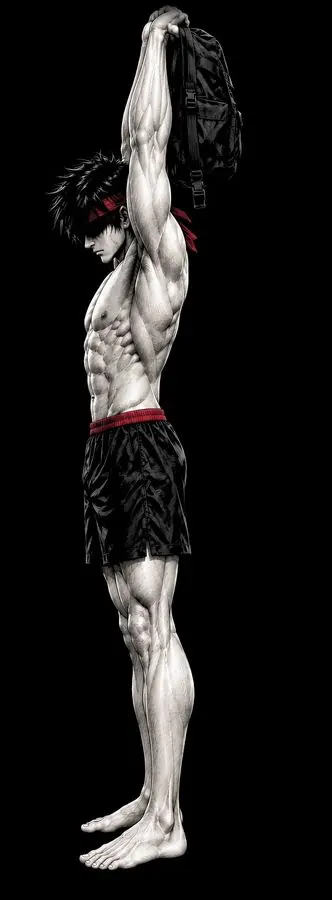
    Ryu seen from the side with his arms straight overhead
    Finish

    01 · Triceps (long head)

    Overhead Triceps Extension

    cable, dumbbell or backpack

    • 3 × 10–15sets × reps
    • 1–2 minrest
    • RIR 1reps in reserve
    • Elbows pointing at the ceiling. Lower the weight behind your head until you feel the stretch.
    • Straighten your arms without flaring your elbows. Never go heavy overhead alone.

    HomeBackpack overhead extension. Hold the backpack by its top handle with both hands.

    Study: Overhead grew the triceps long head +28.5% vs +19.6% with the arm at the side. [Maeo et al. 2023]

  2. Ryu standing with dumbbells hanging, arms almost straight
    Start
    Ryu curling the dumbbells up toward his shoulders
    Finish

    02 · Biceps · Brachialis

    Dumbbell Curl

    one arm or both

    • 3 × 8–12sets × reps
    • 1–2 minrest
    • RIR 1reps in reserve
    • Let the arm go almost straight at the bottom: that's where the biceps is stretched.
    • Elbow stays by your side. No swinging.
    Ryu standing on a resistance band and curling it

    HomeBackpack or band curl. Stand on a band, or curl a backpack by its top handle.

    Study: Curls in the arm-almost-straight range grew the elbow flexors +8.9% vs +3.4%. [Sato et al. 2021]

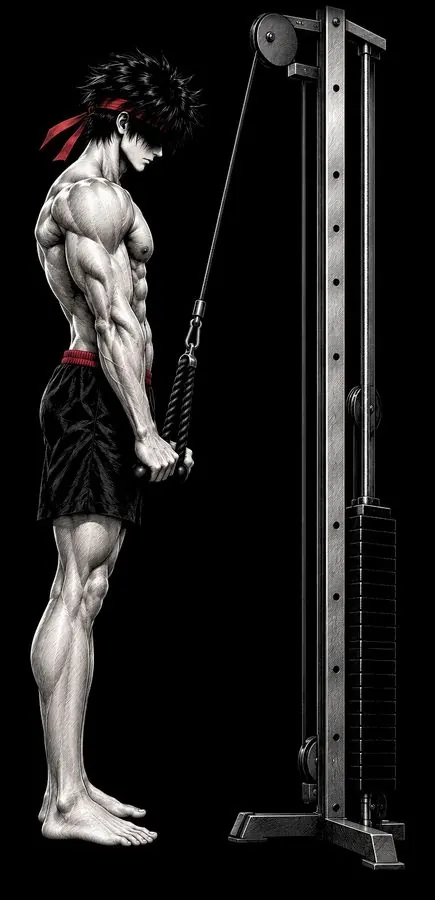
  3. Ryu at a cable station pushing a rope down, elbows pinned to his sides

    03 · Triceps

    Triceps Pushdown

    cable with a rope

    • 3 × 10–15sets × reps
    • 1 minrest
    • RIR 0–1reps in reserve
    • Elbows pinned to your sides. Push down until your arms are straight.
    • Spread the rope at the bottom, come back up to 90° slowly.
    Ryu doing a close-grip push-up with his hands under his chest

    HomeClose-grip push-up. Hands under your chest, elbows brushing your ribs on the way down.

    Study: Push-ups alone grew the triceps +10.5% in 8 weeks. [Kikuchi & Nakazato 2017]

  4. Ryu doing a hammer curl, palm facing in, dumbbell raised

    04 · Brachialis · Forearms

    Hammer Curl

    dumbbells

    • 3 × 10–15sets × reps
    • 1 minrest
    • RIR 0–1reps in reserve
    • Palms facing each other, thumbs up.
    • Lift to the shoulder, lower slowly, no swinging.

    HomeWater-bottle hammer curl. Two full bottles or a band, palms facing each other.

    Note: Honest note: no study has measured whether hammer curls grow the brachialis more. They're here for variety and forearms.

Day 5 · Legs

Quads · Hamstrings · Glutes · Calves · 17 hard sets · 65–75 min

Day 5 · Legs: Quads · Hamstrings · Glutes · Calves, 17 hard sets, 65–75 min
ExerciseSets × repsRestRIR
Squat
Home: Backpack goblet squat
4 × 6–103 min2
Romanian Deadlift
Home: Backpack Romanian deadlift
3 × 8–102–3 min2
Leg Press
Home: Bulgarian split squat
2 × 10–122 min1–2
Seated Leg Curl
Home: Nordic curl
3 × 10–121–2 min0–1
Leg Extension
Home: Reverse Nordic
2 × 12–151 min0–1
Standing Calf Raise
Home: One-leg calf raise on a step
3 × 10–151 min0–1
  1. Ryu standing tall, holding a weight against his chest
    Start
    Ryu in a deep squat, hips below his knees, holding the weight at his chest
    Finish

    01 · Quads · Glutes · Adductors

    Squat

    goblet with a dumbbell, or barbell once you've learned it

    • 4 × 6–10sets × reps
    • 3 minrest
    • RIR 2reps in reserve
    • Sit down between your heels until your hips are below your knees, heels flat, chest up.
    • Push the floor away. Knees follow your toes; don't let them cave in.

    HomeBackpack goblet squat. Hug a backpack loaded with books or water bottles.

    Study: Full squats grew the glutes +6.7% vs +2.2% for half squats. [Kubo et al. 2019]

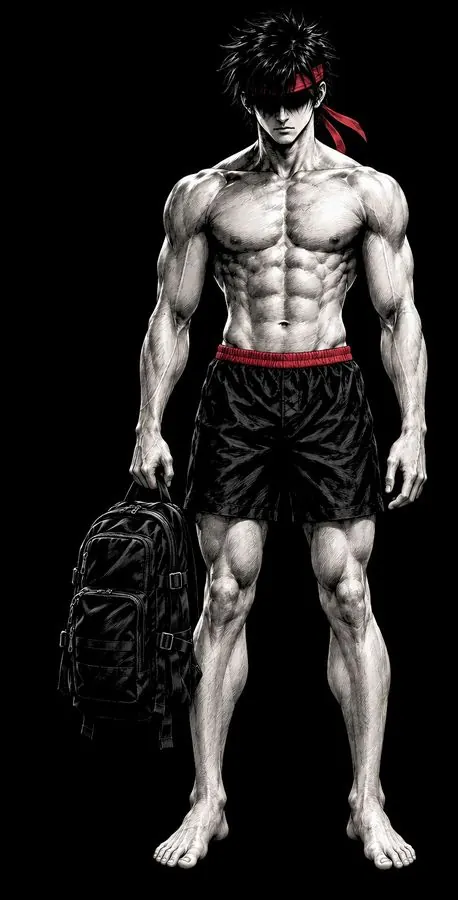
  2. Ryu standing upright, holding a loaded bag in front of his thighs
    Start
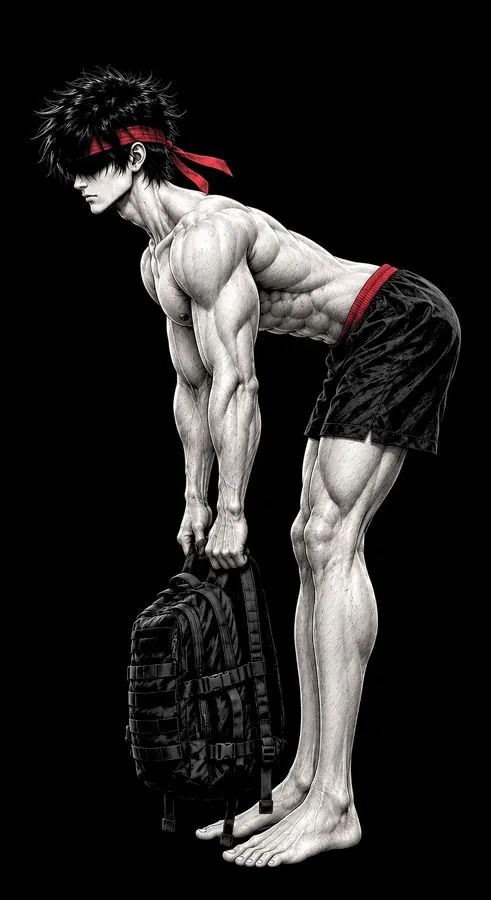
    Ryu hinged forward at the hips with a flat back, the bag near his shins
    Finish

    02 · Hamstrings · Glutes

    Romanian Deadlift

    dumbbells or barbell

    • 3 × 8–10sets × reps
    • 2–3 minrest
    • RIR 2reps in reserve
    • Soft knees. Push your hips back until you feel a strong stretch behind your thighs, back flat.
    • The weight slides close to your legs. Stand up by squeezing your glutes.

    HomeBackpack Romanian deadlift. Hold a loaded backpack by its straps, or one heavy bag in each hand.

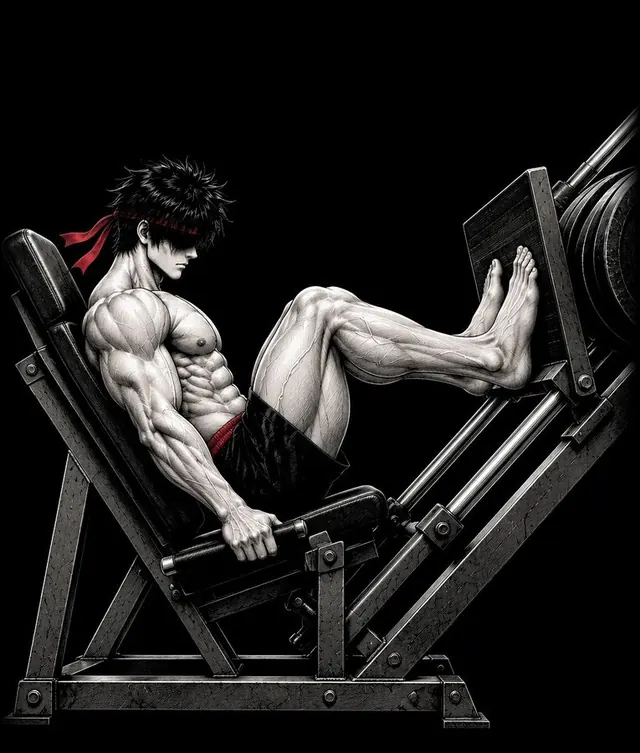
  3. Ryu on a 45-degree leg press with his knees bent toward his chest
    Start
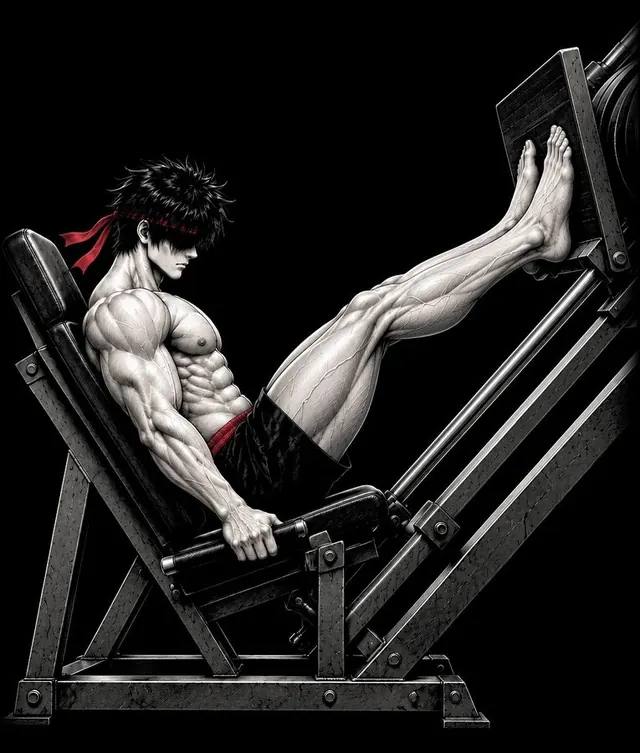
    Ryu on the leg press with his legs pushed out, knees almost straight
    Finish

    03 · Quads · Glutes

    Leg Press

    45° machine

    • 2 × 10–12sets × reps
    • 2 minrest
    • RIR 1–2reps in reserve
    • Lower until your knees come close to your chest, without your lower back lifting off the pad.
    • Push through your whole foot. Stop just short of locking your knees.
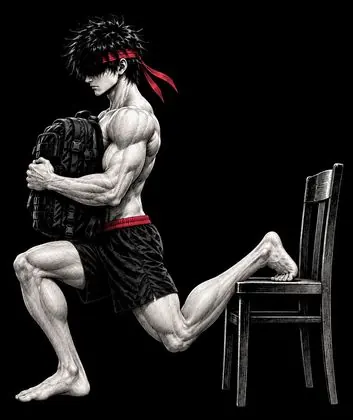
    Ryu in a Bulgarian split squat, rear foot on a chair, hugging a backpack

    HomeBulgarian split squat. Rear foot on a chair, a backpack hugged to your chest. Sets are per leg.

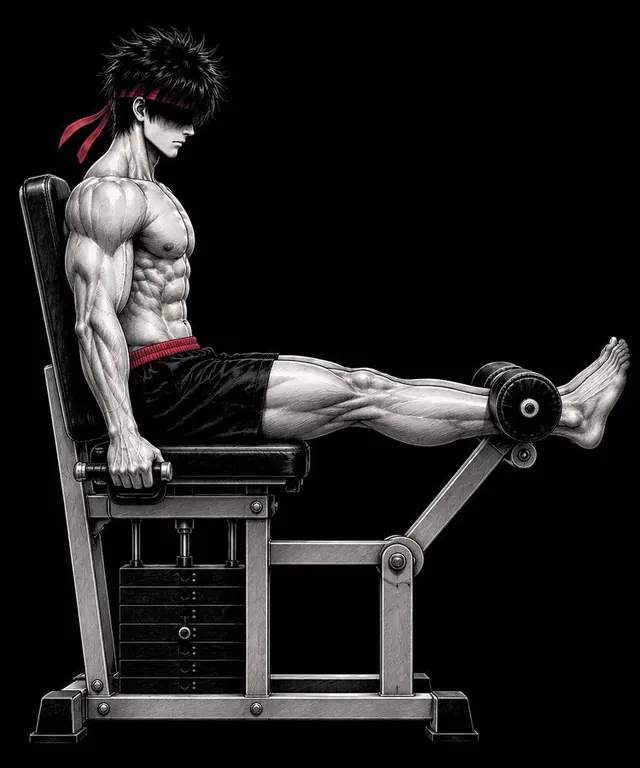
  4. Ryu on a seated leg curl machine with his legs straight
    Start
    Ryu on the seated leg curl machine with his heels curled under the seat
    Finish

    04 · Hamstrings

    Seated Leg Curl

    machine

    • 3 × 10–12sets × reps
    • 1–2 minrest
    • RIR 0–1reps in reserve
    • Sit all the way back and lock the thigh pad down tight.
    • Curl as far as you can, then let your legs straighten slowly, in 2 to 3 seconds.
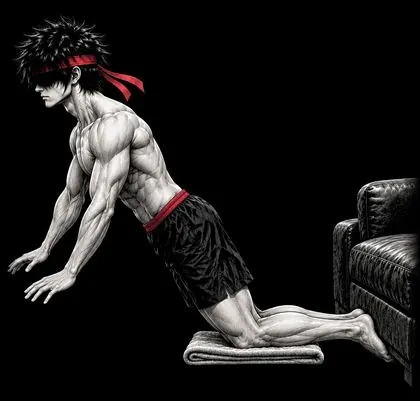
    Ryu kneeling with his heels hooked under a couch, leaning forward in a Nordic curl

    HomeNordic curl. Heels under a heavy couch, knees on a towel. Lower as slowly as you can, catch yourself with your hands. Start with 2–3 reps a set.

    Study: Seated leg curls grew the hamstrings +14% vs +9% for lying ones. [Maeo et al. 2021]

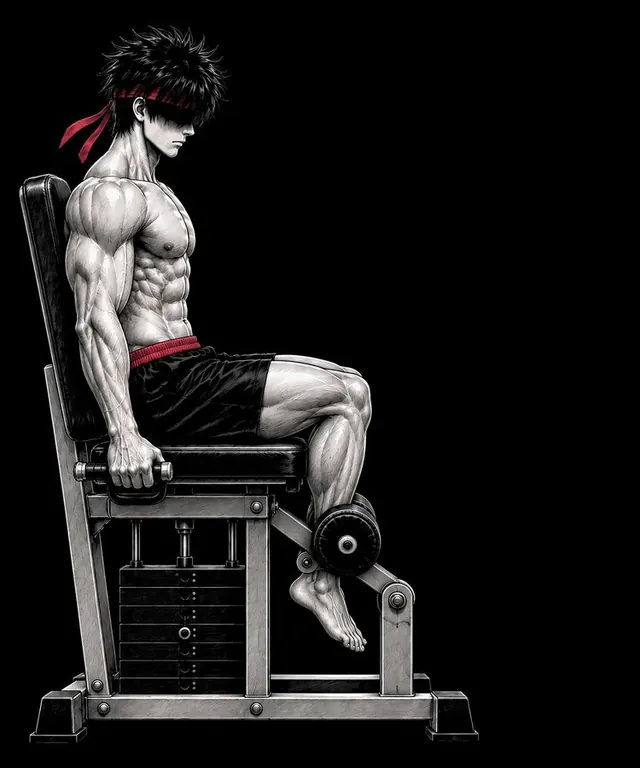
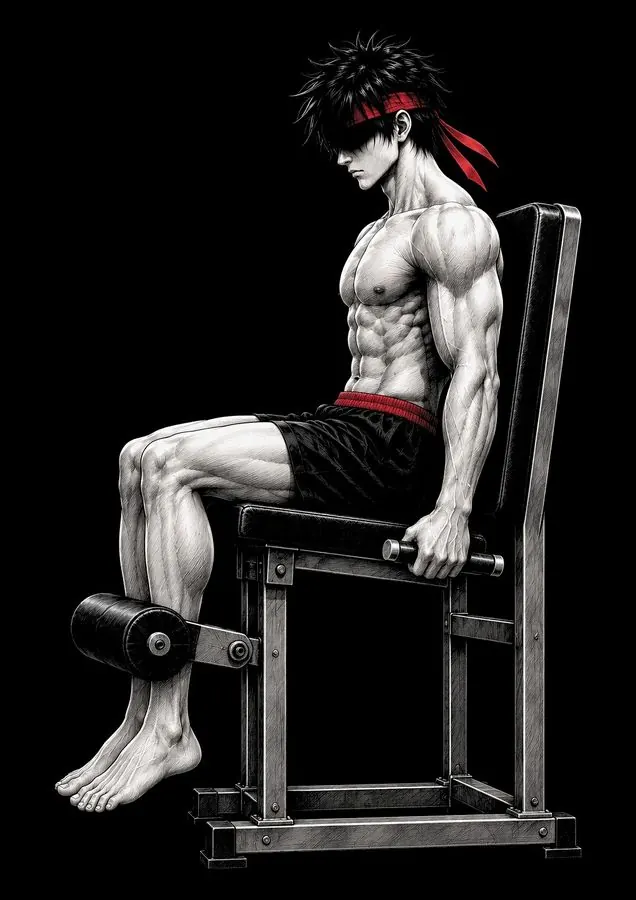
  5. Ryu on a leg extension machine with his knees bent
    Start
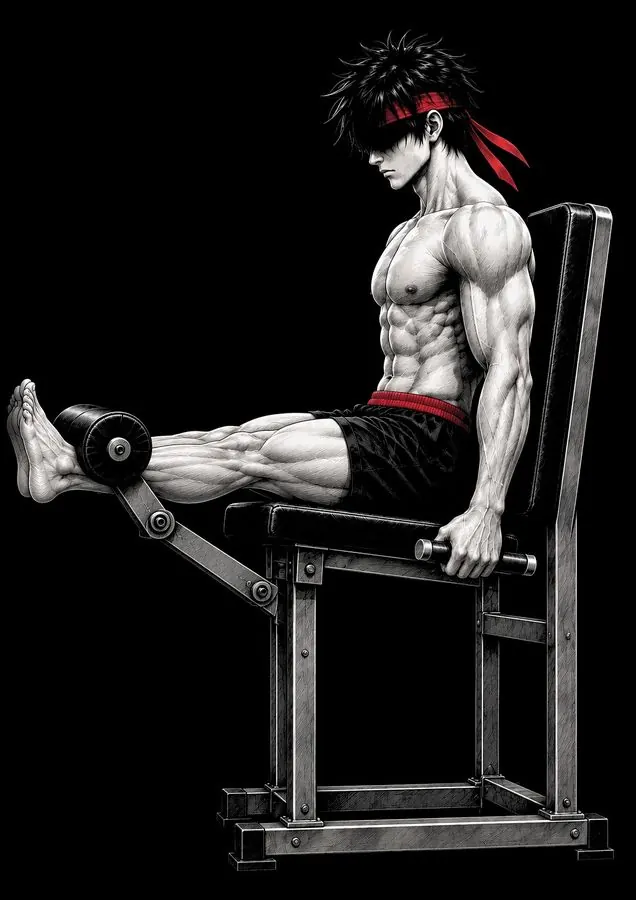
    Ryu on the leg extension machine with his legs straight
    Finish

    05 · Quads (rectus femoris)

    Leg Extension

    machine

    • 2 × 12–15sets × reps
    • 1 minrest
    • RIR 0–1reps in reserve
    • Line up your knee with the machine's pivot, roller on your lower shins.
    • Pause one second at the top, then lower slowly all the way down.
    Ryu kneeling and leaning back with a straight body in a reverse Nordic

    HomeReverse Nordic. Kneel on a towel, body straight from knees to head, lean back only as far as you can control.

    Study: Squats barely grow the rectus femoris; leg extensions do. [Zabaleta-Korta et al. 2021]

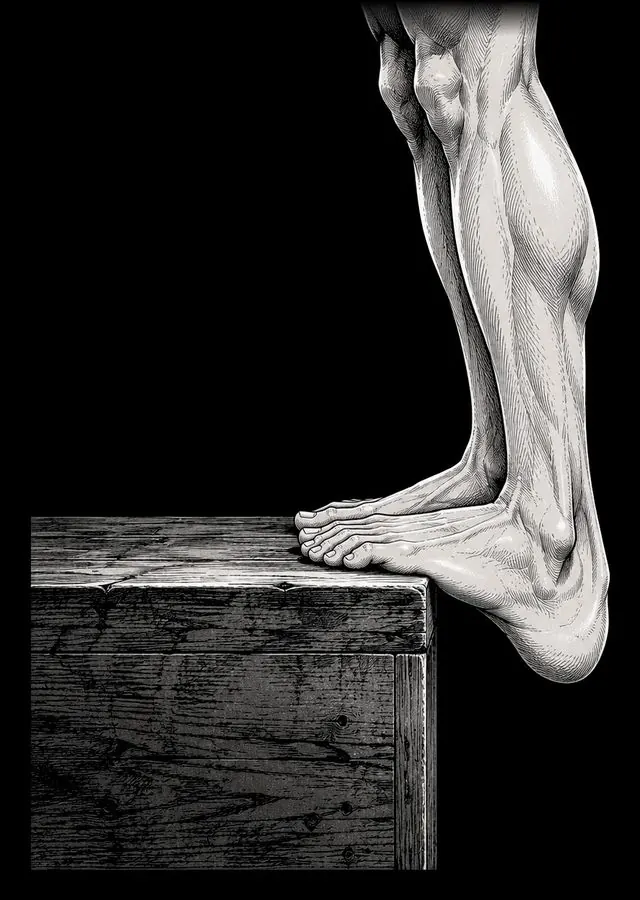
  6. Close-up of a heel lowered below the edge of a step in a deep calf stretch
    Start
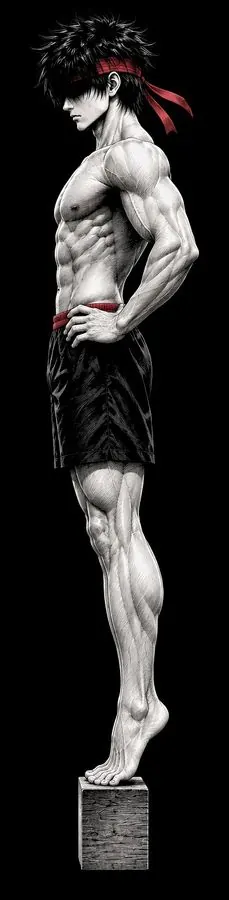
    Ryu standing on his toes on a block at the top of a calf raise
    Finish

    06 · Calves (gastrocnemius)

    Standing Calf Raise

    machine, step or stairs

    • 3 × 10–15sets × reps
    • 1 minrest
    • RIR 0–1reps in reserve
    • Knees straight. Lower your heels as far as they go and pause 1–2 seconds in the stretch. No bouncing.
    • Rise as high as you can on your toes.

    HomeOne-leg calf raise on a step. One hand on the wall for balance, the other holding a backpack.

    Study: Standing raises grew the gastrocnemius far more than seated ones (+12.4% vs +1.7%). [Kinoshita et al. 2023]

How to run it

Warm up · about 10 minutes

  1. Get warm, 3–5 min: brisk walk, bike or jump rope until you're breathing a little harder.
  2. Move the joints, 3 min. Upper days: 10 arm circles each way, 15 band pull-aparts, 10 incline push-ups. Lower days: 10 leg swings per leg, 10 bodyweight squats, 10 hip hinges.
  3. Ramp up the first lift: 1 × 10 very light, 1 × 5 at about half your working weight, 1 × 3 at about three quarters.

RIR: how hard each set is

"RIR 1–2" means: stop when you feel you have 1 or 2 clean reps left. RIR 0 means no more reps possible; 4 or more means the weight is too light.

First two weeks: stay at RIR 3 and learn the movements. After that, follow the card. Going all the way to failure isn't needed [Refalo et al. 2024].

Progress: double progression

Keep the same weight until you reach the top of the rep range on every set, at the RIR on the card. Then add the smallest weight step (+2.5 kg / 5 lb on a barbell, the next dumbbell pair, the next pin) and start again at the bottom of the range.

At home: more reps, then more load in the backpack, then a slower descent (3–4 seconds), then a harder version. Adding reps at the same weight worked as well as adding weight [Plotkin et al. 2022].

Deload, stalls and patience

Deload every 6–8 weeks, or when your joints ache or your numbers drop: one easy week, same exercises, half the sets, RIR 3–4. A full week off mid-program didn't cost any muscle in one study; strength gains were a little smaller [Coleman et al. 2024].

Don't compare: on the same 12-week program, biceps size changed from −2% to +59% between people [Hubal et al. 2005]. Compare yourself with last month's log.

The rules of this program, each backed by a study

Six rules shape this program. Each comes with the study behind it; the exercise-specific studies are on the cards above.

  1. Hard sets build muscle

    The more hard sets a muscle gets each week, the more it grows, up to a point: the gains shrink as you add more. These programs sit in the range where beginners grow well.

    Study: Dose-response relationship between weekly resistance training volume and increases in muscle mass (2017). Schoenfeld BJ et al., J Sports Sci, PMID 27433992.

    Study: The Resistance Training Dose Response: Meta-Regressions Exploring the Effects of Weekly Volume and Frequency (2026). Pelland JC et al., Sports Med, PMID 41343037.

  2. Stop 1–2 reps short of failure

    Growth tends to rise as sets end closer to failure, but going all the way to failure didn't add more muscle than stopping 1–2 reps short.

    Study: Exploring the Dose-Response Relationship Between Estimated Resistance Training Proximity to Failure, Strength Gain, and Muscle Hypertrophy (2024). Robinson ZP et al., Sports Med, PMID 38970765.

    Study: Similar muscle hypertrophy following eight weeks of resistance training to momentary muscular failure or with repetitions-in-reserve (2024). Refalo MC et al., J Sports Sci, PMID 38393985.

    Study: Influence of Resistance Training Proximity-to-Failure on Skeletal Muscle Hypertrophy (2023). Refalo MC et al., Sports Med, PMID 36334240.

  3. Beat your log

    Adding reps at the same weight worked as well as adding weight: both count as progress.

    Study: Progressive overload without progressing load? The effects of load or repetition progression on muscular adaptations (2022). Plotkin D et al., PeerJ, PMID 36199287.

  4. Rest longer on big lifts

    Three minutes between sets beat one minute for strength and for thigh growth in trained men.

    Study: Longer Interset Rest Periods Enhance Muscle Strength and Hypertrophy in Resistance-Trained Men (2016). Schoenfeld BJ et al., J Strength Cond Res, PMID 26605807.

  5. Heavy or light, both work

    Light and heavy loads taken close to failure built similar muscle. Heavy loads built more maximal strength, which is why the big lifts stay in the 6–10 rep range.

    Study: Strength and Hypertrophy Adaptations Between Low- vs. High-Load Resistance Training (2017). Schoenfeld BJ et al., J Strength Cond Res, PMID 28834797.

  6. Train the stretch

    In several studies, exercises that load a muscle in its stretched position grew it more: seated leg curls, overhead triceps extensions, standing calf raises, curls from a straight arm. Most of these studies were done on beginners.

    Study: Greater Hamstrings Muscle Hypertrophy but Similar Damage Protection after Training at Long versus Short Muscle Lengths (2021). Maeo S et al., Med Sci Sports Exerc, PMID 33009197.

    Study: Triceps brachii hypertrophy is substantially greater after elbow extension training performed in the overhead versus neutral arm position (2023). Maeo S et al., Eur J Sport Sci, PMID 35819335.

    Study: Triceps surae muscle hypertrophy is greater after standing versus seated calf-raise training (2023). Kinoshita M et al., Front Physiol, PMID 38156065.

    Study: Elbow Joint Angles in Elbow Flexor Unilateral Resistance Exercise Training Determine Its Effects on Muscle Strength and Thickness (2021). Sato S et al., Front Physiol, PMID 34616309.

Cover of the free 5-Day Split program PDF

Free PDF

Get the 5-Day Split PDF

19 pages: every exercise drawn, with sets, reps, rest and effort, a warm-up, a progression guide and a 4-week training log. Every rule in it is backed by a study, with the references inside.

The download link appears right here; nothing is emailed to you. We keep your email and the program you chose to know who downloaded what, and we write to you only if you ticked the box. Privacy policy.

Safety

Before you start

This is general fitness information, not medical advice. If you have pain, an injury or a health condition, check with a doctor or physical therapist first, and stop any exercise that hurts.

Under 18? Strength training is safe and worthwhile for teens when it is supervised and taught properly; most reported injuries came from poor technique, wrong loads or no supervision [Faigenbaum & Myer 2010] [Lloyd et al. 2014]. Learn the lifts with a coach, a PE teacher or an adult who knows them. Light weights first, no max lifts, never heavy weights over your head alone.

Watch

On the channel

Skinny Arms? You're Training The Wrong Muscle

Your triceps is about 2.6 times bigger than your biceps, and most skinny guys only do curls. Your upper arm is three muscles: here's how to grow each one, with what the studies actually measured (sources below).

Questions people ask

What is a 5 day split?

One body part a day for five days: chest, back, shoulders, arms, legs, then two rest days. Each muscle is trained hard, directly, once a week. Chest day also works your triceps and back day your biceps, so the arms get extra work.

Is a 5 day split worse than full body?

Not when the weekly sets are equal: in a meta-analysis of 14 studies (392 people), split and full-body routines gave the same strength and muscle gains [Ramos-Campo et al. 2024]. But one study in trained men found that training each muscle 3 times a week grew the arms more than a split [Schoenfeld et al. 2015], and an earlier meta-analysis favoured twice a week over once [Schoenfeld et al. 2016]. The split works as long as you do all the sets and never skip a day.

Who should not do a 5 day split?

People whose schedule changes a lot: with a split, a missed day means that muscle waits two weeks. Take the Upper / Lower plan instead. If you have pain or an injury, see a doctor or physical therapist first.

What if I miss a day?

Keep the order and do the missed session on Saturday rather than skipping it.

How long are the sessions?

Chest, shoulders and arms take 45–55 minutes, back 55–65 minutes and legs 65–75 minutes, rest between sets included.

Can I do this program at home?

Yes. Every exercise has a home version that needs a backpack you can load with books or water bottles, two resistance bands, a doorway pull-up bar, a sturdy chair and a step. For example, push-ups replace the bench press and Nordic curls replace the leg curl machine.

What does RIR mean?

Reps in reserve: how many more clean reps you could still do when you stop the set. RIR 1–2 means you stop when you feel you have 1 or 2 reps left. In one 8-week study, stopping 1–2 reps short of failure grew the quads as much as going to failure [Refalo et al. 2024].
The other free programs

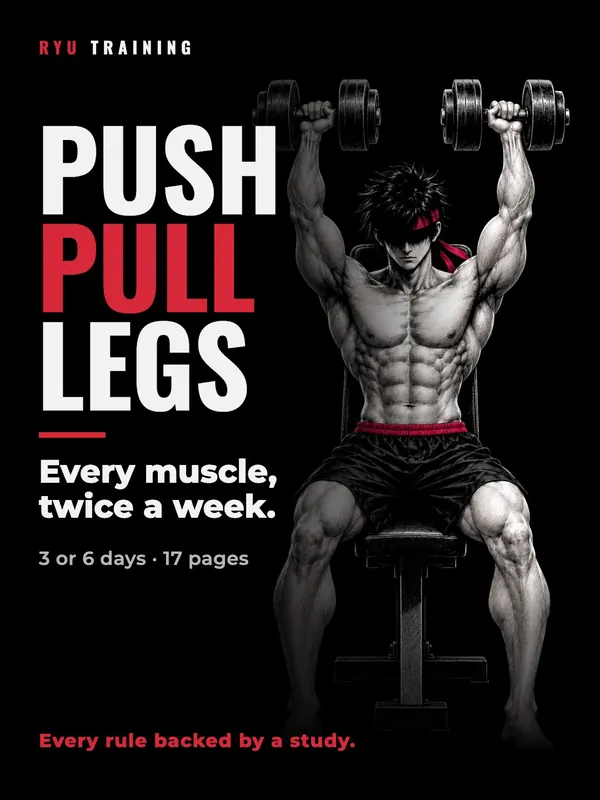
  • Cover of the free Push / Pull / Legs program PDF by Ryu Training, with Ryu drawn in manga style
    • 3 or 6 days a week
    • ≈ 60 min a session
    • Gym or home

    Push / Pull / Legs

    The program for skinny guys who want real size and strength, at the gym or at home.
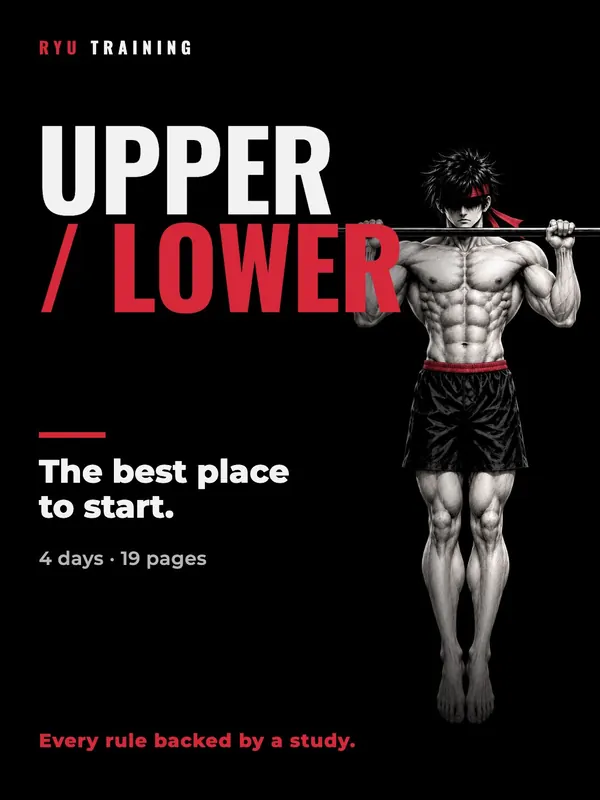
  • Cover of the free Upper / Lower program PDF by Ryu Training, with Ryu drawn in manga style
    • 4 days a week
    • ≈ 55 min a session
    • Gym or home

    Upper / Lower

    Four sessions a week, every muscle trained twice. The best balance of results and recovery for most people.

Anime workouts

References

Every study below was checked on PubMed. Results in short, as the studies report them; most were done on young adults, often beginners.

  1. Coleman M et al. (2024). Gaining more from doing less? The effects of a one-week deload period during supervised resistance training. PeerJ. PMID 38274324.39 trained people, 9 weeks: a 1-week break in the middle did not change lower-body muscle growth; strength gains were a little smaller.
  2. Faigenbaum AD, Myer GD (2010). Resistance training among young athletes: safety, efficacy and injury prevention effects. Br J Sports Med. PMID 19945973.Review: strength training is safe and worthwhile for teens when it is supervised and taught properly; most reported injuries came from poor technique, wrong loads or no supervision.
  3. Hubal MJ et al. (2005). Variability in muscle size and strength gain after unilateral resistance training. Med Sci Sports Exerc. PMID 15947721.585 adults, the same 12-week arm program: biceps size changed anywhere from -2% to +59%.
  4. Kikuchi N, Nakazato K (2017). Low-load bench press and push-up induce similar muscle hypertrophy and strength gain. J Exerc Sci Fit. PMID 29541130.18 untrained men, 8 weeks: push-ups grew the chest +22% vs +26% for a light bench press, and the triceps +10.5% vs +5.7% (table 1 of the full text).
  5. Kinoshita M et al. (2023). Triceps surae muscle hypertrophy is greater after standing versus seated calf-raise training. Front Physiol. PMID 38156065.14 beginners, 12 weeks: standing calf raises grew the outer gastrocnemius +12.4% vs +1.7% for seated ones; the soleus grew about the same (+2.1% vs +2.9%).
  6. Kubo K et al. (2019). Effects of squat training with different depths on lower limb muscle volumes. Eur J Appl Physiol. PMID 31230110.17 men, 10 weeks: full squats grew the glutes +6.7%, half squats +2.2%. The rectus femoris barely changed with either.
  7. Larsen S et al. (2025). Dumbbell versus cable lateral raises for lateral deltoid hypertrophy: an experimental study. Front Physiol. PMID 40692697.24 trained lifters, 8 weeks: dumbbell and cable lateral raises grew the side delts the same (+3.3 to 4.6%).
  8. Lloyd RS et al. (2014). Position statement on youth resistance training: the 2014 International Consensus. Br J Sports Med. PMID 24055781.International consensus, endorsed by sports-medicine and paediatric organisations, on how young people should strength train.
  9. Lopes JSS et al. (2019). Effects of training with elastic resistance versus conventional resistance on muscular strength. SAGE Open Med. PMID 30815258.8 studies: training with elastic bands built as much strength as dumbbells and machines (strength, not size).
  10. Maeo S et al. (2021). Greater Hamstrings Muscle Hypertrophy but Similar Damage Protection after Training at Long versus Short Muscle Lengths. Med Sci Sports Exerc. PMID 33009197.20 adults, 12 weeks: seated leg curls grew the hamstrings +14%, lying leg curls +9%.
  11. Maeo S et al. (2023). Triceps brachii hypertrophy is substantially greater after elbow extension training performed in the overhead versus neutral arm position. Eur J Sport Sci. PMID 35819335.21 adults, 12 weeks: overhead extensions grew the triceps long head +28.5% vs +19.6% with the arm at the side, with lighter weights.
  12. Pelland JC et al. (2026). The Resistance Training Dose Response: Meta-Regressions Exploring the Effects of Weekly Volume and Frequency. Sports Med. PMID 41343037.67 studies, 2,058 people: more weekly sets meant more growth, with diminishing returns. Training a muscle more often added strength, but its effect on size was compatible with zero.
  13. Plotkin D et al. (2022). Progressive overload without progressing load? The effects of load or repetition progression on muscular adaptations. PeerJ. PMID 36199287.43 trained people, 8 weeks: adding reps at the same weight worked as well as adding weight.
  14. Ramos-Campo DJ et al. (2024). Efficacy of Split Versus Full-Body Resistance Training on Strength and Muscle Growth. J Strength Cond Res. PMID 38595233.14 studies, 392 people: split and full-body routines gave the same strength and muscle gains when weekly volume was equal.
  15. Refalo MC et al. (2023). Influence of Resistance Training Proximity-to-Failure on Skeletal Muscle Hypertrophy. Sports Med. PMID 36334240.Meta-analysis of 15 studies: no clear extra growth from going all the way to failure.
  16. Refalo MC et al. (2024). Similar muscle hypertrophy following eight weeks of resistance training to momentary muscular failure or with repetitions-in-reserve. J Sports Sci. PMID 38393985.18 trained lifters, 8 weeks: stopping 1-2 reps short of failure grew the quads as much as going to failure.
  17. Robinson ZP et al. (2024). Exploring the Dose-Response Relationship Between Estimated Resistance Training Proximity to Failure, Strength Gain, and Muscle Hypertrophy. Sports Med. PMID 38970765.Meta-regression: muscle growth tended to rise as sets ended closer to failure (exploratory).
  18. Sato S et al. (2021). Elbow Joint Angles in Elbow Flexor Unilateral Resistance Exercise Training Determine Its Effects on Muscle Strength and Thickness. Front Physiol. PMID 34616309.32 beginners, 5 weeks: curls in the arm-almost-straight range grew the elbow flexors +8.9% vs +3.4% for the bent-arm range.
  19. Schoenfeld BJ et al. (2015). Influence of Resistance Training Frequency on Muscular Adaptations in Well-Trained Men. J Strength Cond Res. PMID 25932981.20 trained men, 8 weeks: a 3-day total-body routine grew the elbow flexors more than a 1-day-per-muscle split; strength gains were similar.
  20. Schoenfeld BJ et al. (2016). Effects of Resistance Training Frequency on Measures of Muscle Hypertrophy. Sports Med. PMID 27102172.Earlier meta-analysis: training a muscle twice a week beat once a week (effect size 0.49 vs 0.30).
  21. Schoenfeld BJ et al. (2016). Longer Interset Rest Periods Enhance Muscle Strength and Hypertrophy in Resistance-Trained Men. J Strength Cond Res. PMID 26605807.21 trained men, 8 weeks: resting 3 minutes between sets beat 1 minute for squat and bench strength and for thigh muscle thickness.
  22. Schoenfeld BJ et al. (2017). Dose-response relationship between weekly resistance training volume and increases in muscle mass. J Sports Sci. PMID 27433992.15 studies: each extra weekly set was linked to about 0.37% more muscle growth.
  23. Schoenfeld BJ et al. (2017). Strength and Hypertrophy Adaptations Between Low- vs. High-Load Resistance Training. J Strength Cond Res. PMID 28834797.21 studies: light and heavy loads taken close to failure built similar muscle; heavy loads built more max strength.
  24. Schoenfeld BJ et al. (2019). How many times per week should a muscle be trained to maximize muscle hypertrophy?. J Sports Sci. PMID 30558493.25 studies: with the same weekly sets, training a muscle 1, 2 or 3+ times a week gave similar growth.
  25. Zabaleta-Korta A et al. (2021). The role of exercise selection in regional muscle hypertrophy: a randomized controlled trial. J Sports Sci. PMID 34743671.Leg extensions grew all three measured regions of the rectus femoris; Smith-machine squats mainly grew the middle of the vastus lateralis.